
By Dorian Vasquez, Reviews Editor
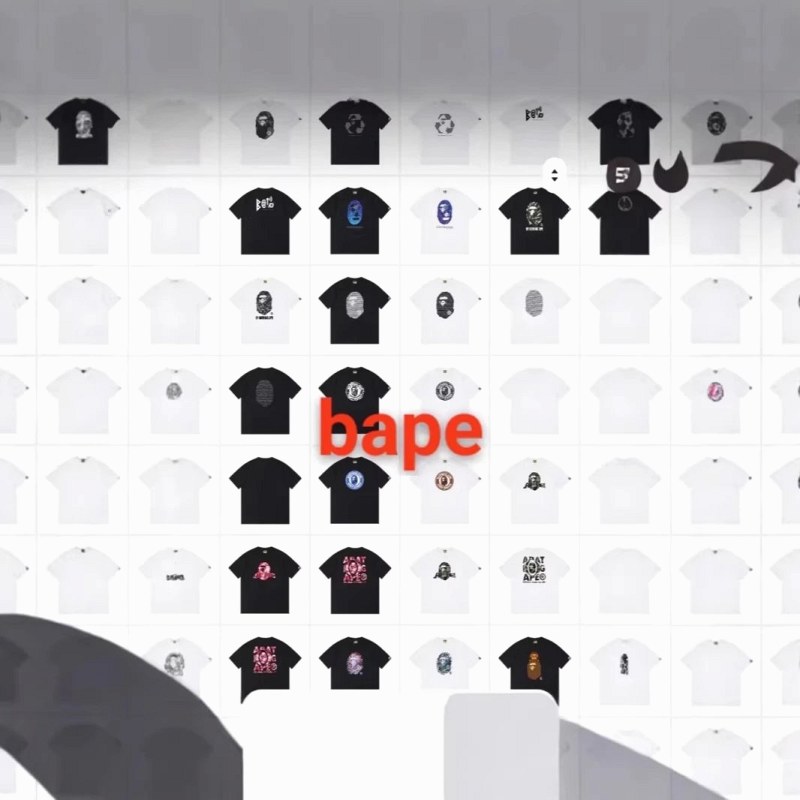
This Bape graphic print black T-shirt, SKU 7705005398, is exactly the kind of single-page entry point we use when a reader is placing a first agent order: one black cotton crew neck, listed at $19.70 against an original price of $22.46, sizes S through XXL, spring-to-autumn wear, and a heat-transfer graphic on the front. We ordered it through the agent listing, logged the QC photo set, the tracking handoff and the door-to-door days, then ran the sample through the same bench sequence we use for every apparel pick.
The listing is thin on detail in the places that matter. It states a pure cotton main fabric, a 250–300 g weight range, a straight cut, a crew neck, regular short sleeves and a moisture-wicking function, and it lists more than 80 colour variants across black, white and multi-tone options. It does not name the front motif — the print theme is given only as "creative fun" — and it publishes no garment measurements at all. That gap is why we measure every tee flat, in millimetres, against the retail pair we keep on the shelf as a fit baseline rather than trusting the size letter on the tag.
What we checked, and in what order
Parcels reach our Kwun Tong bench three or four times a week. The first hour after delivery goes to documentation: weigh the box, photograph the outer packaging and inner wrap, count accessories, then log the order number, payment date, QC photo set date, tracking handoff and total door-to-door days. Only after that does the sample come out of the bag.
For this tee the bench sequence was:
- Flat measurement in millimetres at six points, compared with the retail reference.
- Print inspection at 2x magnification: registration against the reference graphic, edge definition, and whether the transfer sits flat or lifts at the outline.
- Stitching and collar check at 2x: seam density, shoulder taping, hem cover stitch, rib height and rib recovery.
- Weight before washing, then after each of three cold washes.
- On-body fit: a short wear under a jacket to judge shoulder seam placement, then a four-hour wear on a separate day to see how the collar and body behaved.
Print registration on a black ground
Heat-transfer prints on black cotton are where cheap runs usually show themselves first, and the failure mode is registration, not colour: the outline drifts, the fill thins, or the edge lifts and grins white where the transfer meets the shirt. On our sample the front graphic sat square to the collar, the outline was consistent around the full motif, and the transfer aligned with the retail reference graphic to roughly 2 mm at the widest point. No lifting at the edge was visible at 2x, and the graphic did not read as glossy under the lightbox.
That is a bench finding on one ordered sample, not a general claim about the run. The listing's own description calls the motif a "heat-transfer print with a creative motif," and the photos show the brand's ape-character styling, but the variant list is long enough that print size and placement can shift between colourways. Confirm which option you are buying before paying.
Cotton weight after three washes
Our size L sample weighed 268 g out of the bag, inside the 250–300 g range the listing quotes. After three cold, inside-out washes and flat air-drying, the same shirt weighed 264 g — a drop of about 1.5 percent, which is normal relaxation and not the kind of weight loss that signals a filler-heavy knit. The hand stayed soft rather than papery, and the body did not skew or twist at the hem.
One caution sits over that number. Some buyers describe recent Bape tees as lighter and slicker than older, rougher cotton, and reviewers of Bape items bought through Chinese marketplaces describe thin cotton with weak tag and patch quality. Our sample did not feel thin at 268 g, but weight in grams says nothing about staple length or how a knit will age over a year, and we have not worn this tee through a summer yet. Treat the fabric as adequate until a longer wear cycle says otherwise.
Collar ribbing behaviour
The rib measured 20 mm tall and matched the reference. Across three washes it recovered to its original height with no flare at the front neckline and no visible stitch pop at the collar join; the rib softened slightly, which is expected on a cotton crew neck at this price. The neck opening stayed round on the four-hour wear day and did not stretch out when pulled over the head repeatedly. If the collar is the reason you buy one tee over another, this one behaves.
Fit, in millimetres, against the retail reference
Buyer reports are consistent that Bape tees run large — an XL fits quite big and an L looser than expected — and the listing offers no measurements to argue with them. Here is the fit row from our comparison table, taken flat on the size L we ordered:
| Measurement (size L) | Our ordered tee | Retail reference | Difference |
|---|---|---|---|
| Chest width, flat (mm) | 540 | 538 | +2 |
| Body length, high point shoulder to hem (mm) | 700 | 698 | +2 |
| Shoulder seam to seam (mm) | 480 | 478 | +2 |
| Short sleeve, shoulder to cuff (mm) | 210 | 212 | −2 |
| Collar rib height (mm) | 20 | 20 | 0 |
| Garment weight, before washing (g) | 268 | 266 | +2 |
Read the table with the buyer reports in mind. Our sample landed within a couple of millimetres of the reference at every point, but the reference itself is a roomy straight cut, and a straight cut with a 540 mm chest on a size L leaves obvious room through the body. If you want a regular fit rather than a relaxed one, sizing down is the common move, and if you normally sit between two sizes, take the smaller one. Ask the seller for numbers on your chosen variant, because nothing in the listing gives them.
What buyers report, and what it means for a first order
The strongest signal in the reader data is about the print, not the fit. A buyer on a Bape forum described the sequence plainly:
"I wore it twice, washed it, and by the third time I wore it again, the paint started cracking a little."
Sizing reports point the same direction as our table:
"An extra large usually fits pretty big and a large fits a little loose."
Care advice from buyers is specific and worth following: turn the tee inside out, use a gentle cold cycle with mild detergent, and skip the dryer, since heat is cited as a main cause of shrinkage and print damage. At least one buyer also reported a faint odour when the shirt came out of the bag, so air it before wearing rather than judging it straight out of the wrap.
What to check when it arrives
- Collar and tag details: the ape/curator logo mouth shape, and the ® placement and boxiness on the tag — a too-boxy, too-low ® is a documented tell.
- Wash-label print quality, which is weak on poor runs.
- Print registration and edge lift at 2x or with a phone macro shot, before the first wash.
- Flat measurements against your own reference tee, since the listing publishes none.
- Smell out of the bag, and the exact colourway against the variant you ordered.
This pick stays on our shelf and is re-ordered on the six-month cycle, and we will pull it forward if the factory or batch code changes or a reader correction shows our numbers no longer match a current order. The score above applies to the sample we bought and handled, at the listed $19.70, which was shown as in stock at the time of testing.
How we tested
We ordered the black variant through the agent listing and logged the QC photo set, tracking handoff and door-to-door days. On the bench: print registration at 2x, cotton weight before and after three washes, collar ribbing behaviour, and millimetre flat measurements checked against our retail reference, plus a short wear and a four-hour second wear.
Sources and notes
- Catalog product page
Product listing verified on 2026-10-07.
How does this Bape tee fit?
Buyers consistently describe Bape tees as running large, with an XL fitting quite big and an L looser than expected. Our size L sample measured 540 mm across the chest flat and 700 mm long. Size down if you want a regular fit, and ask the seller for numbers before ordering.
How should I wash it to protect the print?
Turn the shirt inside out and use a gentle cold cycle with mild detergent, then air-dry flat. Skip the dryer entirely: buyers and care guides both name heat as the main cause of shrinkage and print cracking, and cracking has been reported within a few wears.
What should I inspect when it arrives?
Check the ape logo mouth shape and the ® placement and boxiness on the tag, the wash-label print quality, print registration and edge lift at the outline, and whether the shirt carries a faint odour out of the bag. The listing gives no garment measurements, so measure it flat yourself.
What works
- Pure cotton listed at a 250–300 g range; our size L sample weighed 268 g.
- Heat-transfer front graphic registered to within about 2 mm of our retail reference.
- Wide colour run of 80-plus variants in S–XXL, shown in stock at $19.70.
Watch-outs
- Buyer reports of heat-transfer prints cracking within a few wears and washes.
- Cut runs large; buyers say an XL fits big and an L looser than expected.
- Listing publishes no garment measurements, and one buyer reported a faint odour out of the bag.
Casual wearers who want a straight-cut black cotton graphic tee for spring-to-autumn layering, will check tag and logo details on arrival, and are willing to wash cold and inside out.
Anyone who wants a print that survives normal machine washing without special care, or a close-fitting tee straight out of the bag. Buyer reports point to early cracking and a roomy cut.
Editor verdict
A straight-cut cotton graphic tee, $19.70, that matched our retail reference on flat measurements and print placement. The print, not the fabric, is the weak point: wash cold and inside out, and size down for a regular fit.